In honor of National Poetry Month, I would like to dedicate this blog post to my Father, Robert Fee, whom I credit for my love of poetry. Poetry spoke to his soul and it continues to speak to mine. I can recollect certain poems instantaneously when a time presents itself. My love of poetry, cultivated by the times I grew up in, filled a hunger inside of me that was not satisfied with movies, cable TV or social media like we have today. Poetry comes to us bringing life, and focuses on giving us a better understanding of it. Poetry is ancient and vital language, and can be inspirational on the highest level. Once embedded in your memory, it becomes an experience that is intense, much more so than ordinary language.
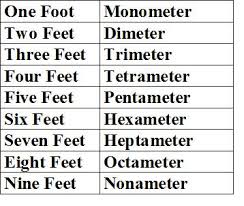 My family had a brown tattered anthology type book containing short stories and poems. It was this book which my father read from that became my poetic foundation. I also was taught poetry in school – it was not viewed as offensive or controversial curriculum as it can be now. I believe education about poetry is essential towards a better understanding of it and once I learned the structure of poetry, it made grasping it all the more easier. Advanced Poetry, which I took in college, opened up a new structural world of poetry for me – I learned about “Poetic Feet” and was absolutely mesmerized – I mean, who knew? The poetic foot is the basic metrical unit that generates a line of verse in most traditions of poetry. The unit is composed of syllables, the number of which is limited by the sound pattern the foot represents. Check out this quick guide to Prosody for a crash course.
Poems can be fitting to use in most circumstances; weddings, funerals, birthdays, and anniversary’s. The poetic prose can turn sorrows and pain into something beautiful, and can help to celebrate life’s milestones very eloquently. My father read poetry often, and I can conjure up the image of him reading poems with a marked intensity, and I could see his feelings behind the words he read aloud. Although initially I would roll my eyes at the readings, the prose slowly became a part of my psyche. Ozymandias, a fourteen-line sonnet metered in iambic pentameter by Percy Bysshe Shelley, is a powerful statement about the insignificance of human beings to the passage of time and one I think of often when I find myself getting too “self important”. “Trees“, a lyric poem by American poet Joyce Kilmer consisting of twelve lines of rhyming couplets of iambic tetrameter verse, depicts a feminine personification of a tree pressing its mouth to the Earth’s breast, looking at God, and raising its arms to pray. The Road Not Taken by Robert Frost, written with four stressed syllables per line, varying on an iambic tetrameter base, makes me to be mindful to live the Carpe Diem “Seize the Day” attitude.
…I shall be telling this with a sigh
Somewhere ages and ages hence:
Two roads diverged in a wood, and I –
I took the one less traveled by,
And that has made all the difference.
Of course, I cannot forget the childhood poems which were read to me over and over again, and poems I often read to myself while lying in bed. Wynken, Blynken and Nod, a fantasy bed-time story of three children sailing in a wooden shoe and fishing in the stars by American Poet Eugene Field, symbolizes a sleepy child’s blinking eyes and nodding head. Who can forget “Little Orphant Annie“ a poem written by James Whitcomb Riley with the famous lines that always made me squeal…
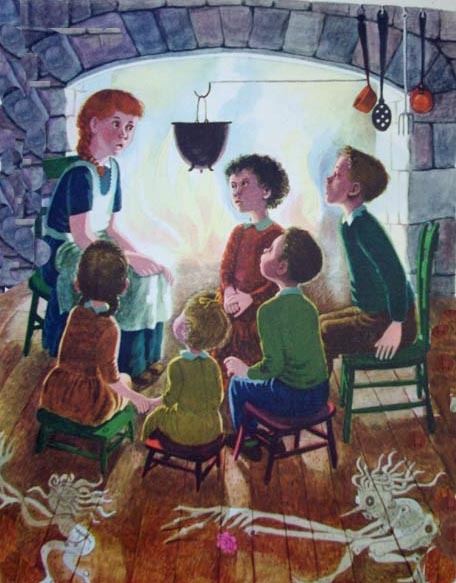
The Child’s Garden of Verses by Robert Louis Stevenson never got old for me. “Bed in Summer” and “A Good Play” lulled me to sleep and when I recollect those verses in each poem, I can still smell the Nebraska night air and recall having to go to sleep before it was dark. As the American Poet Amy Lowell most eloquently wrote… “Poetry and History are the textbooks to the heart of man, and poetry is at once the most intimate and enduring.”
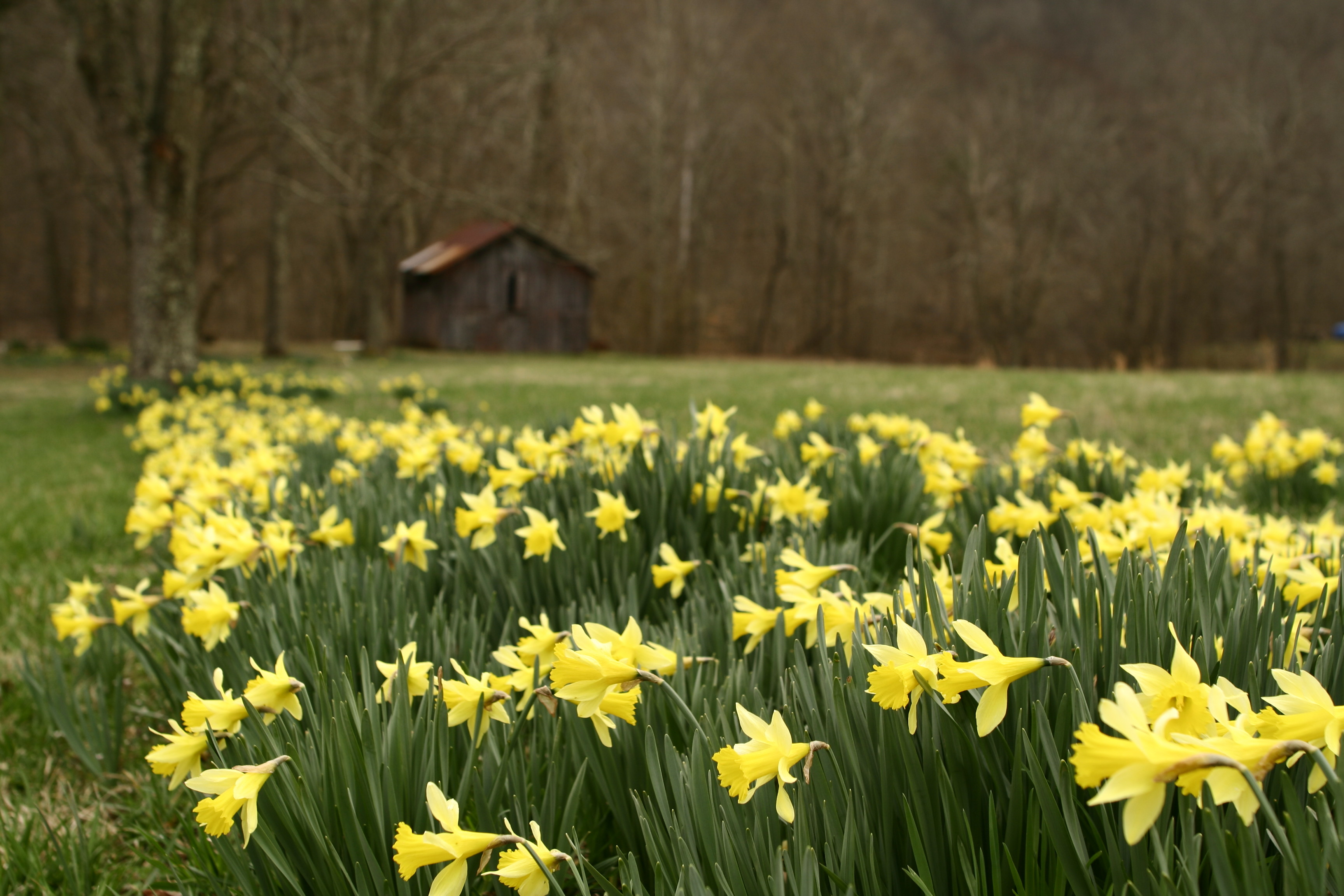
Perhaps the most important poem to me and one so influential to my family that my sister read it at our father’s funeral, is the four six-line stanzas of a quatrain-couplet rhyme scheme where each line is metered in iambic tetrameter – William Wordworth’s Daffodils. This beautifully written poem is great to think of when I get bogged down in worrisome details of my life and keeps me grounded in the inherent unity between man and nature – a sort of “the sun will come up tomorrow” feeling. Spring is always just around the corner, and the daffodils will bloom yet again. I have a copy of this poem on my desktop at work along with a picture of daffodils as a reminder to stay centered. Poetry to me is experiencing life at its fullest.
Daffodils
I wandered lonely as a cloud
That floats on high o’er vales and hills,
When all at once I saw a crowd,
A host, of golden daffodils;
Beside the lake, beneath the trees,
Fluttering and dancing in the breeze.Continuous as the stars that shine
And twinkle on the milky way,
They stretched in never-ending line
Along the margin of a bay:
Ten thousand saw I at a glance,
Tossing their heads in sprightly dance.The waves beside them danced; but they
Out-did the sparkling waves in glee:
A poet could not but be gay,
In such a jocund company:
I gazed–and gazed–but little thought
What wealth the show to me had brought:For oft, when on my couch I lie
In vacant or in pensive mood,
They flash upon that inward eye
Which is the bliss of solitude;
And then my heart with pleasure fills,
And dances with the daffodils.William Wordsworth
 Life Experiences Add Up