My husband and I host a Tuesday night bike ride through the beautiful areas of the north shore of Chicago. After our ride, we congregate at a local brewery for a post ride beer and good company.
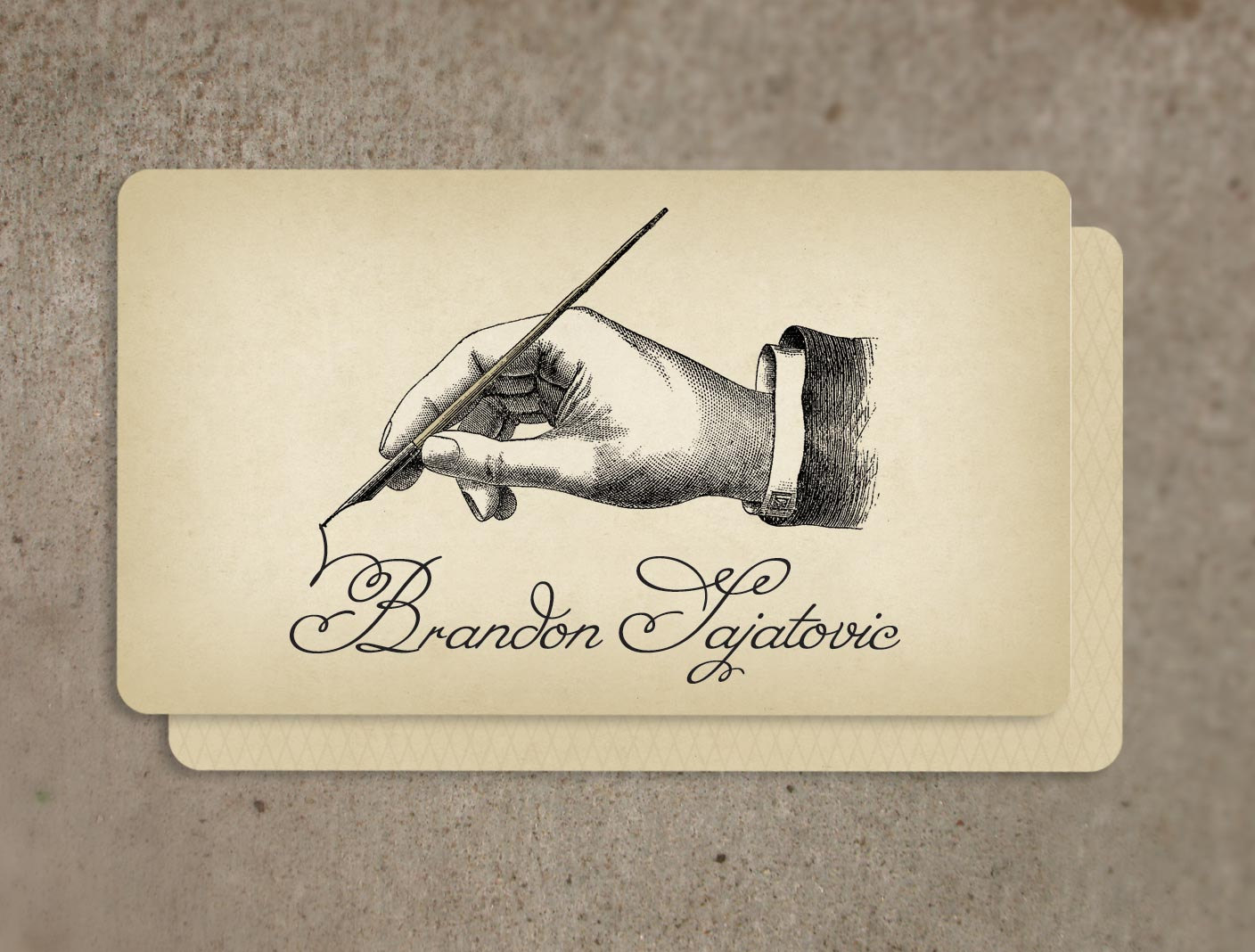
On this particular Tuesday, a new couple rode with our group and hung out with us afterwards. We hit it off – they both were funny, nice, and we seemed to have a lot in common. As the evening was winding down, I was about to turn to my new friend to ask for her name again and her contact information, when I noticed a small decorative piece of cardboard sitting by my beer, which I thought was a coaster. Turns out it was my new friends “calling card”. The card was a small 2×2 piece of light cardboard that said “Hi, nice to meet you” and contained her cell number and email. It struck me as so individualistic that she handed out calling cards in this day and age. Just what was a calling card? I recognized the term, but realized I knew nothing about it.
Calling cards were prevalent in the Victorian age and necessary due to the social scene at the time. Back in the day, it was perfectly fine to just drop by someone’s house for a chat. However, “dropping in” was nothing casual, there were only certain hours when women accepted callers, mostly in the afternoon. Stopping by someone’s house did not mean you were let in right away. Sometimes the visitor would present his card to the butler, who would then let you know if your sought after hostess was taking calls. If she was not taking callers, that’s where the card comes in – you leave it as a sign that you stopped by.
Calling cards were a custom, a concrete piece of evidence that you were interested in someone. They were a memento left behind that was a little piece of yourself. Cards were kept in beautiful cases and made from paper of the finest quality. They were also very elegantly engraved. Calling cards are historical lost pieces of art.
These cards were a handy way of recalling who had come to visit, and which calls needed to be returned. To the cultured disciple of social law of the Victorian age, it was a written form of communication that was the only choice people had to convey a subtle and unmistakable intelligence – there was no internet. The texture of the paper, the artistic calligraphy, and even the hour of leaving it placed the stranger whose name is on the card, even before his manners, conversation and face have been able to explain who he is.
What are our calling cards now? What is our generations custom for reaching out? I guess we “ping” people, whether it be a friend request on Facebook, or a chat on Instagram or Snapchat. We ask people to “find us” on various digital outlets and in doing so put ourselves out there for the world to see – not just a select few that we choose. There is a loss of intimacy this way – the effort is minimal compared to the creation of a calling card. Our profile that we create ends up being an opening up of ourselves to all, leaving little in the form of discretion, imagination and mystery. To the world in 2017, a “calling card” is our digital footprint – snippets of our life through photos and unedited comments. Today we have a profile picture that we hope conveys what defines us, and one that we create in seconds and change daily.
Since that night of the bike ride, I have found myself looking at my new friends calling card, and enjoying the bit of mystery in it. I didn’t have to scroll through my phone to find her, but rather I grabbed a small delicate note that said “Hi, nice to meet you”. I keep the calling card in my wallet – it just makes me feel good. It represents a timeless communication piece which took effort and thought in creating. Her small gesture will always be a warm token of how we met.
 Life Experiences Add Up