Giving Blood

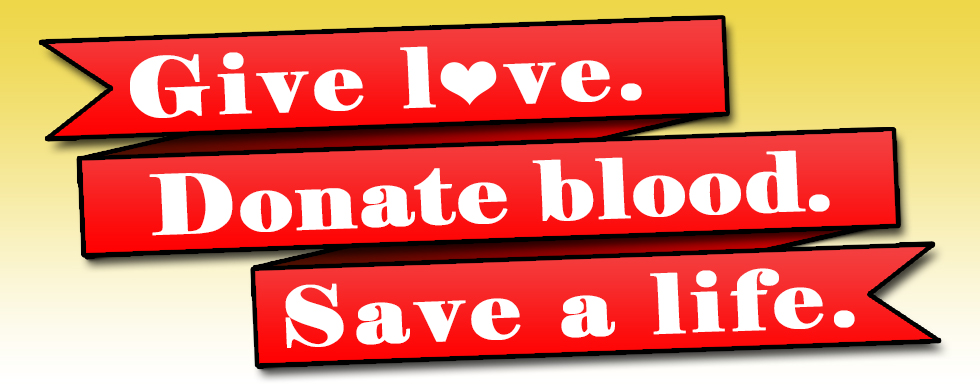
I started donating blood a few  years ago after being encouraged by my daughter to attend a blood drive sponsored by her employer.  While at the blood drive, I had a nice conversation with the phlebotomist about the ins and outs of blood donation and  I found it fascinating.   For starters – there was and is a massive blood shortage.  Cold winters are to blame, as those who sign up to donate blood don’t make their appointments due to inclement weather.

So far in 2018, more than 5,500 blood and platelet donations have gone uncollected and more than 150 blood drives were forced to cancel due to the early January winter storm along the eastern seaboard.  Another reason for the shortage is increased demand, due to the increased number of complex therapies such as chemotherapy, organ transplants and heart surgeries.

Even temporary disruptions to blood and platelet donations can diminish the availability for hospital patients, Clifford Numark, senior vice president of Red Cross Blood Services, said in a statement. It’s the blood on the shelves that helps save lives in an emergency.

Humans cannot live without blood, and there is no replacement or substitute for blood.  Blood performs many jobs for our bodies and is continuously working around the clock.  What is this mystery substance and what is its makeup?

Whole blood makes up about 7% of a person’s body weight and consists primarily of red blood cells, white blood cells, platelets and plasma. Red blood cells, created in the bone marrow, are constantly being replaced.  White blood cells fight off infection.  Platelets coagulate blood and help it clot.   Plasma keeps the various other cells fluid and moving through the veins and arteries.  Not only can you donate blood, but you can donate platelets and plasma.

What is your blood type that is unique to you?  There are four types:

  • Type A – Red blood cells with only “A” molecules on it.
  • Type B –  Red blood cells with only “B” molecules on it.
  • Type AB – Red blood cells that have a mixture of both “A” & “B” molecules
  • Type O – Red blood cells that have neither “A” or “B” molecule.

O positive is the most common blood type, representing 37 percent of the U.S. population.  B and AB are less common, with O negative being very rare – representing less than 5% of the world’s population. The red cross loves me as my blood type is O negative which means I am a universal red cell donor.  Blood type A, B, and AB can only be donated to those who match their type.  Type O-negative blood is universal and therefore is compatible with any blood type.  Some people with rare blood types such as O-negative bank their own blood in advance of surgical procedures to ensure that blood is available to them.

Blood is also classified by rhesus (Rh) factor, which refers to a specific red blood cell antigen in the blood.  If your blood has the antigen, you’re Rh positive.  If your blood lacks the antigen, you’re Rh negative.

Donating blood is critical.  Your contribution is important for a healthy and reliable blood supply and it makes you feel good knowing you will help change a life.  On the day of your donation, you will be given a set of questions to answer regarding your medical history and your hemoglobin levels will be tested.  Hemoglobin is a protein in your body that contains iron and gives blood its red color. Hemoglobin is responsible for carrying oxygen from your lungs to nourish all of the tissues in your body.  Women must have a minimum hemoglobin level of 12.5g and males must have a minimum level of 13.0g.  Women must also be over 110 pounds to give blood.  I hover right at 110, so I am only able to donate 1 pint of blood as opposed to 1 quart.

You can check the Red Cross Eligibility Requirements before your first visit.

You will get an email after you have donated blood telling you that your blood is on the way to the hospital, and how many lives you are saving.  This is a powerful email to receive.  You will be given a donor card, where you can logon to the LifeSource website and view your wellness profile after your donation.  Your pulse, blood pressure, body temperature and hemoglobin can be viewed, as well as  your cholesterol levels.

If you struggle with how to give back and save a life in the process – I cannot think of a simpler thing to do than to donate blood.  It takes about 45 minutes out of your day every 3 months or so, you receive a sticker, save a life, and have some apple juice and cookies when you are finished – what could be more simple?

Blood-Drive-Sitebox


Physcholgical Clutter

I am one of those people who gets their jollies by organizing and getting rid of clutter – I love to clean the house, organize my sock drawer, put things in their right place, and keep things simple.   I have kept things simple for all of my worldly possessions, but the term “clutter” can also refer to the psychological junk we have going on in our heads; obligations, responsibilities, habits, obsessions, and personality traits.  I have been neglecting my neurological head-space as I trod forward with closet organization and alphabetizing my spice rack and I have come to the conclusion that my head space is a mess.

What is so helpful about freeing up head-space?  I’ve pondered on this a bit, and while organizing the house and tidying are processes that help me navigate my day-to-day life more easily,  the parameters on how I live my life emotionally need a deep cleaning. There is just so much going on in my little brain I am afraid.  I am a perfectionist, I get worked up over things and I feel anxious from time to time.  My head space contains fear, worry, uncertainty – all those things that take up so much energy and rob me of free time.  It’s about time I started working on this stuff.

So – how to organize my head space?  This list below contains some helpful tips on how to clear your head-space from clutter.  Most items in this list are common sense, but they will take a concerted effort to put into practice.

The English Oxford Dictionary defines headspace as:

Time to think clearly or to be free from mental pressures.


FREE YOUR HEAD SPACE!

  1. Breath.  Breath.  Breath.  Yogis measure the length of their life by breathes – breathing 10 times per minute equates to living until you are 100 years of age and breathing 15 times per minute means you will live to 80.  If you breathe fast, your life will be shortened.   Breathing slow and deeply keeps you in the present. Conscious breathing comes from the more evolved areas of the brain in the cerebral cortex.  Activating the cerebral cortex has a relaxing and balancing effect on the emotions. By consciously breathing, you are controlling which aspects of the mind dominate, causing your consciousness to rise from the primitive/instinctual to the evolved/elevated.  The slowing down of your breath has a soothing effect on your emotional state – allowing you to think more clearly and get rid of all the cobwebs inside your head.
  2. Get outside.  Get fresh air.  Sometimes something as simple as a walk around the block can be just the ticket.  Why?  Fresh air is good for digestion, improves your blood pressure and heart rate, strengthens your immune system, and most importantly, fresh air cleans your lungs and all that oxygen you are breathing in helps to clean out your head.   A cleaner head means more energy and a sharper mind.
  3. Get plenty of sleep.  Sleep allows our brains to recharge and our bodies to rest. When we are well rested, thinking becomes much more clear.
  4. Drink lots of water.  Being just half a liter dehydrated can increase your cortisol levels, and cortisol is a stress hormone.   Staying in a good hydrated status can keep your stress levels down. When you don’t give your body the fluids it needs, you’re putting stress on it, and it’s going to respond to that.  Your headspace does not need additional stress placed on it.
  5.  Self Care.  Self-care is doing something for yourself or that you enjoy doing. It’s not selfish to pamper yourself, and to take time for yourself.  You will enjoy doing it!  I thought about this over the Christmas  holiday.  I threw a great 3 day party – lists checked off, food cooked, gifts bought – no one lacked for anything.  But at the end of the day I felt spent and anxious – it was time to do something for me.  I soaked in the bath with epsom salts and some bath oils, and was in total bliss.  I felt the pressure on my brain just melt away.

The human mind is rarely quiet. Questions, ideas, and plans seem to pass through our consciousness without much order or purpose sometimes. Knowing how to clear your mind can help with anxiety, sleep difficulties and should be a priority in our lives.  Try to put into practice these simple things on this list – the practice will turn into habit.  And remember – it’s not just the house that needs a deep cleaning!


Leave Your Cares Behind

I keep bringing up movies in my posts, but sometimes you find yourself watching a profound moment in a film that you reflect on from time to time. “Men Don’t Leave” – a heartbreaking, wonderful, life affirming movie starring Jessica Lange and Joan Cusack comes to mind. Jessica Lange’s character (Beth) is suffering from terrible depression due to the loss of her husband, and spends her time in bed – ignoring the cries of help from her friends, her son, and from herself.  Joan Cusack’s character, Jody, plays one of Beth’s friends, and in a moment of “I’ve had it”, storms into Beth’s apartment,  hauls her out of bed, and takes her on an outing.  This outing? A ride in a hot air balloon. Why you might ask?  Keep reading.

As the hot air balloon leaves the earth’s surface, you see Beth breathe more deeply, you notice her relaxing a bit, and she actually smiles at one point. You can see the weight from all the problems that have been dragging her down drop off.  Now granted this is not a cure-all for depression, nor did Beth return home a new person, but she gained a perspective that we all need every now and then – rise above your problems, leave them behind, or look down at them above the earth so they appear smaller and smaller.  This is helpful to see that we are merely a grain of sand within the sphere of  life and so are our problems.

I encounter this  “leave your cares behind” perspective when I fly – and it happens to me every time.  For some reason, leaving the earth and feeling truly alone in the sky helps me to relax and put things in perspective. I believe all things are possible when I am flying. I love to look down at the patterns of streets, houses, the terrain of the Earth, and the patterns of agriculture. It’s as if I am looking down at a diorama – life in a little box where I can lift the lid and peer inside. I don’t see the nitty-gritty nor the minutia,  but the whole of physical life splayed out in front of me.  Earth is a beautiful and extraordinary place and this perspective I fail to notice at times when I am “in it”.

Someone gave me a great piece of advice once that I have followed when necessary.  If there are times where you find yourself in a confrontational situation, try to hover above yourself and view the situation as if watching it on a screen from above.  This exercise has helped me to gain great perspective while in uncomfortable situations.  I had a very upsetting encounter with a former work colleague a long time ago, and just doing that very thing – not reacting but watching the situation,  I found myself looking at the situation from a different point of view.  I was able to think more clearly and get a handle on the circumstances and most importantly, my emotions.

I have found this “spiritual exercise”—the act of reflecting on things from a larger perspective—to be incredibly cathartic and nourishing. The catharsis come from seeing that things don’t matter as much as (or in the way that) we thought. You will find nourishment resulting from that dose of humility and reverence.

The key to all of this is to carry this perspective with your feet firmly planted in the Earth.  Try to gain perspective with your life – step back and see the big picture while being firmly on the ground.  This is VITAL – clear your “inbox” today and assess what is really important.