The 17 Laws of Success

The one tradition among people from all over the world in the New Year is the making of “New Year’s Resolutions”.  While I am a tried and true resolution lover and I stand by them, my resolutions tend to be task orientated as opposed to an overall plan as to how to lead my life. This year I resolve to:

  1. Read the daily news each day to stay on top of current events
  2. Comb through our family finances
  3. Start Hiking

As I mentioned above, my resolutions are very task orientated.  My philosophy and how I try to life however; year in and year out, day in and day out, moment by moment, is not accomplished by an annual resolution, but from the 17 Laws of Success“.

200px-The_Law_of_SuccessThe Law of Success (originally The Law of Success in 16 Lessons) is the first book set by American author Napoleon Hill, published  in 1928. The book,  commissioned at the request of Andrew Carnegie, is based on interviews of over 100 American millionaires across nearly 20 years, including Henry Ford, J. P. Morgan, John D. Rockefeller, Alexander Graham Bell, and Thomas Edison. Napoleon Hill spent years lecturing the principles of the book all across the country.  Napoleon Hill was an American author in the area of the new thought movement and one of the earliest producers of the modern genre of personal-success literature.

I was raised on the “17 Law’s of Success“.  My father preached it and most importantly, lived it by example.  The lessons or mantras, spelled out in 1928 still ring true in how to life your life.  I have the 17 laws printed out and thumb-tacked to the cork board on the inside of my cubicle and I glance at them often.  When I look at the successes in my life and even the failures, they derive from either using the laws of success or by not adhering to them.

17 LAWS OF SUCCESS

  1. The Master Mind Theory – Positive vs. Negative
  2. A Definite Chief Aim – Must be Written
  3. Self-Confidence
  4. The Habit of Saving
  5. Initiative and Leadership – Creative vs. Competitive
  6. Imagination
  7. Enthusiasm
  8. Self-Control
  9. The Habit of Doing More than Paid For
  10. Pleasing Personality
  11. Accurate Thinking
  12. Concentration
  13. Cooperation – Teamwork
  14. Profiting by Failure
  15. Tolerance vs. “Intelligent Open-Mindedness”
  16. Practicing the Golden Rule
  17. The Habit of Health

How to begin with this list?  There are courses and books on each of these “lessons” where each concept can be analyzed and digested but I find that just by reading this list is enough for me.  I refer to it anytime in my life where I am in the midst of turmoil, strife, happiness, decision-making, and life planning. I always find my answers on how to handle anything from this list.

To make the 17 laws more palatable, here is how translate them for easier comprehension.

  1. Be positive – think happy thoughts!  As you think, you become
  2. Write down your resolutions – they become more powerful that way
  3. You’re OK and gosh darn it – people like you!
  4. A penny saved is a penny earned
  5. Thought is creative and comes through us; competition comes from a belief system that centers around lack
  6. Visualize and see your successes
  7. Enthusiasm generates heat
  8. Don’t let you emotions rule you – think before you speak
  9. The law of increasing returns – do more, receive more
  10. Play nice with the kids on the playground!
  11. Separate facts from information
  12. FOCUS on what you are doing
  13. Work together
  14. Learn from your mistakes
  15. Avoid the DISASTROUS effects of racial and religious prejudices, which are crippling to all human beings
  16. Treat others as you would want to be treated
  17. Put yourself in harmony with the environment and the world

Resolutions are great on a yearly basis, but try something that will hopefully become a life long resolution and philosophy.  After all

We are what we repeatedly do. Excellence, then, is not an act but a habit.  Aristotle

Winter is Coming

There is no such thing as bad weather, just bad clothes.”

Compliments of my brother, this great line, that I regurgitate over and over again, much to the chagrin of my children, is my current mantra for living in a climate that has very cold winters – Chicago.  Prior to hearing this pearl of wisdom, I spent the better part of my life freezing in the winter –  literally.  I wore cute little coats, constantly forgot my gloves and mittens, would dash out of the house to run an errand in a sweat shirt, and I avoided wearing winter boots because they looked “clunky”.    My brother, who kayaks in the wintertime, is snug as a bug in a rug because of his “good clothes”.  Now that the temperature is hovering around 5 degrees, I thought this post most appropriate.

So, my New Year’s resolution a few years ago, after hearing this mantra, was “to not be cold in the winter”. Sound foolish?  This resolution has changed my life and I am now free of worrying about how I look and enjoying winter wear and the winter season in general.   My first step to accomplish my resolution was to purchase a long down coat – another item I avoided because it was not fashionable.  After some research,  I went online and found a great Eddie Bauer long down coat with a furry hood.  I purchased it after the holidays at a fraction of the price.  It comes to just above my ankles so I feel like I am walking around in a blanket.  There are dozens of down jackets to choose from – what to look for?

A down jacket’s fill power is a number that represents the fluffiness of the jacket or the number of cubic inches of the jacket that one ounce of down fills up. A bigger number usually represents better insulation. Fill power depends on several things, including the type of down used (such as more feathers, duck, or goose). Generally, a down jacket with a fill power of 550 and above is a good buy, and anything above 750 will provide excellent insulation. A down jacket with a higher fill power is also usually more compressible.down coat

Beside the jacket’s fill power, another number that is usually listed in a down jacket’s information is the percentage of down in comparison with regular small feathers in the jacket. The number may look something like this: 80/20, 90/10, and so on. The first number is the percentage of down in the jacket, while the second number is the percentage of feathers. The higher the first number, the better the quality of the down jacket.

SOCKS
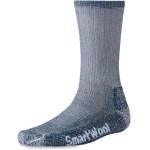
smartwoolsWhat can I say about socks?   These little items became my next purchase – not that I hadn’t ever bought socks before, I had just never purchased good WARM socks.   They make or break your experience in the cold.  After researching my options, I turned on to Smart Wools.  The Smart Wool company makes socks primarily from treated merino wool.  The wool is treated somehow so their socks are itch-free and resistant to shrinking.  They have a moisture-wicking performance and are the best socks to wear in the winter, in my book.  They are a little pricey, but you get what you pay for.  It’s the total warmth of wool without the itchiness. That is what makes them so great.  I cannot say enough about Smart Wool socks.

HATS / MITTENS
Beret
Although there are now skeptics out there that say you don’t lose most of your body heat from your head, I disagree.  Since I started wearing hats in the winter, I remain toasty.  Granted, they can mess up your hair, but that is due to the hat design you select.   Avoid the tight, itchy wool hats and go with a knit beret. These darling hats accomplish the rare feat of being cozy and chic, and with a wide array of warm fabrics available (wool, cashmere, Angora), they hold all of the heat in your head. They’ are also pretty slouchy, which means they don’t cling to your head so much that they’ll crush your curls.

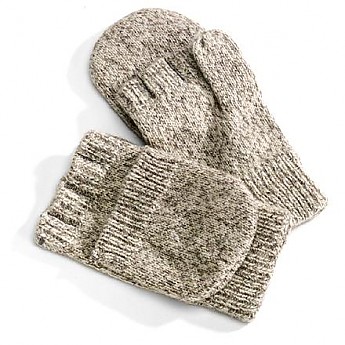
Last but not least, we have mittens or gloves?? What to do?  Mittens are often warmer than gloves because the fingers are allowed to stay together. But the benefits of gloves weighs out too because of the use of individual fingers to grasp tools and open buckles.glomitts

But there is and has been for many years the multi-glove/mitten, known as “Glomitts”.   The fingers are allowed when needed to be use individually while when needed the mitten section is pulled over to help insulate them more.  Glomitts are my hand covering of choice.

If all of this seems like a great amount of work to pile on layers before going out – it is.  But the satisfaction of being so warm when it is so cold out always makes me feel cozy.  I know people who have flocked to the south to avoid the cold, but I have to look at the winter aspects of life that I would miss if I chose to do the same:

  1. Roaring Fires
  2. Sitting in a hot tub on a cold snowy night
  3. Soups, stews and chili – comfort food
  4. Cross country skiing
  5. Sledding and ice skating
  6. The first crocus appearing through the snow
  7. Peppermint hot chocolate
  8. Making snow angels
  9. Sweaters
  10. How pretty everything looks in a fresh snowfall

Really? I Didn’t Know That!

As I have gotten older, I am not as easily excited about things that I used to be. What still really actually excites me, however, are those “aha” moments when you learn something new or discover something that you did not know before. There still is and always will be some common knowledge that is not so common.

HERE ARE SOME THINGS I DISCOVERED IN THE PAST FEW MONTHS…..

Artichoke (Fold)
Artichoke Fold

OK, artichokes are not just a vegetable but a description for a type of napkin fold, an Artichoke Fold.  The Chef where I work made chicken pot pies and of course, they were very hot when taken out of the oven. He recommended putting them in “artichokes” to keep them warm. You can find the YouTube Video showing you how it’s done.


Rubber Band and Paper “Weight” Refers to Thickness

Ordering rubber bands for an office staff is not as easy as you think.
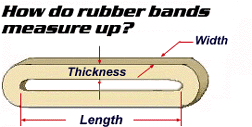
Just check out this online chart for the real skinny on rubber bands. Rubber Band Description My first attempt at purchasing these little necessities yielded an exhaustive search on the many types and sizes.  To order, you need to know the width of the rubber band,  the stretch capacity and the “weight” which refers to the thickness.
The same holds true for paper.  The paperweight refers to the thickness and sturdiness of the paper, not the actual weight of the sheet. Paperweights run from 24 lb. (light office copy paper) to 140 lb. (heavy-duty card stock).

Which Side of the Car is the Gas Tank?
Gas Tank Direction

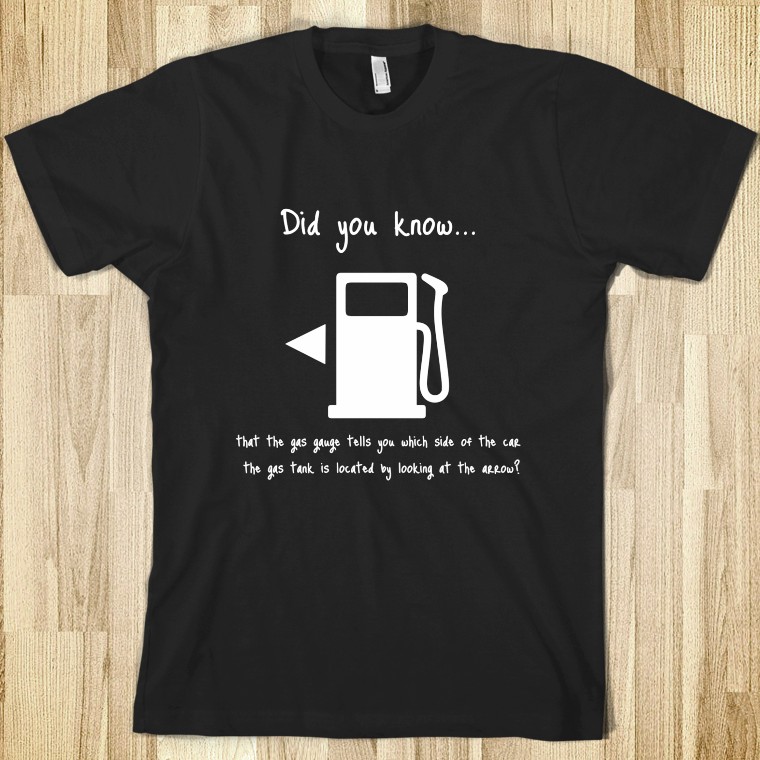
How many times have you pulled into a gas station in a rental car and wondered – which side is the gas tank on?  Instead of having to get out of the car to check for the gas tank, there is such a thing as a “Dashboard Fuel Pump Icon” that shows you which side of the car you will need to fuel up. Check out the t-shirt photo (left) for the icon and check  your dashboard in your car.


Budapest, the Capital of Hungary, is Really Two Cities: Buda and Pest.

I found this out this summer when we visited the “city”.  Our hotel was on the Pest side and most of the night life and fun was on the Buda side.  Over the years,  the boundaries between the two cities have blurred.   Now, the Danube River divides the two towns that are really one:
Buda + Pest = Budapest.

E • gress  –  Huh?
Sorry to admit this, but I did not know what this word meant.  After hearing “egress”  this past summer over and over again as the organization I worked for planned crowd control transportation, this word came up frequently.  According to Websters, the definition of Egress is:

the action of going out of or leaving a place.
“direct means of access and egress for passengers”


Men’s and Women’s Shirts Button on Different Sides
The few times I ironed this summer, I wondered why the buttons on my husband’s had buttons on the right side and the buttons on my shirt were on the left.  Apparently, this is a leftover from the Victorian age that still rings true.   Mens’ buttons are on the right side because men have always tended to dress themselves and most men (and women, for that matter) are right-handed.

Womens’ buttons are on the left side because years ago the women who could afford fancy clothing with numerous buttons would rely on maids to help dress them. So, if a servant (most of whom, naturally, would be right-handed) was going to routinely button up a shirt/dress for someone else, that servant preferred to have the buttons on their right side (which would be the left side of the garment).

It is NOT Illegal to Remove Your Mattress and Pillow Tags
I abided by this rule my whole life – living in fear that the mattress police will come by and tag my mattress as not having the “illegal to remove” tag still on it.  The warning that it is unlawful to remove the tags from a mattress or pillow is not for you! It is for pillow and mattress sellers only.

This became the law in the early 20th century when the US government responded to concerns that some of the materials used in pillows and mattresses easily conducted illnesses or harbored pests such as lice.

Do you have any “don’tcha know’s” you would like to post?  Comments welcome!