Minimalism

Minimalism is a term we hear often these days.  It means living more with less and an end goal of getting rid of what doesn’t serve you.  I have blogged about this very thing but it usually refers to me cleaning out my closet, recycling items and getting rid of clutter.  After watching the documentary on the growing Minimalism movement on Netflix, I have come to look at minimalism in a whole new light.  Granted it does refer to buying fewer items and downsizing your materialistic baggage to a more reasonable level, but I thought by doing only this, I would have achieved the Minimalism nirvana – more breathing room in my home and in my life.  My attempt at minimalism seemed to be centered around discarding material possessions only.  What I didn’t anticipate was that minimalism can refer to our psychological baggage as well.

I realized that living simply is just more than cleaning out your garage, your basement, sorting through photo albums, shoes, scarves, and collectibles.  I have been enlightened. This concept of minimizing translates to our psychological self  as well – letting go of all the thoughts that clutter your mind, letting the fears go that keep you tethered to a situation you really don’t want to be in,  eliminating the worries that you cannot control by putting them in true perspective.  Leaving a job that causes stress and anxiety is another form of minimalism – losing those negative destructive thoughts that take up so much energy  frees yourself up to be able to think more clear.

We hide behind so many things that take up space in our lives – the clothes we wear, the car we drive, and money we make.  Who would you be if you quit your job that makes you miserable but allows you to be the most stylish dresser in the room?  What would happen if you didn’t have the worlds biggest house, the luxury car, the lavish lifestyle? Minimizing those things can be scary.  It can make you vulnerable without those labels to hide behind. But that is exactly what minimalism is about – simplifying all things so you can discover how to live.

As I watched the documentary,  I found myself wondering where all this consumerism came from.  I was a child of the 70’s, and even wealthy people then seemed to live much more modestly than they do now.  I was underwhelmed, quite frankly, when I visited Elvis Presley’s beloved “Graceland” mansion outside of Memphis.  I was expecting a massive palatial estate when in reality it is a modest home space wise.  It had all the bells and whistles to make someone very comfortable, but not the unnecessary grotesque excesses that we see in Lifestyles of the Rich and Famous.  When the 1990’s arrived, so did rampant consumerism. Technology burst on the scene with “must have’s” for everyone, the housing market exploded, and people went from modest homes to mansions.  All of this excess produced nothing but trappings – at some point all this stuff doesn’t increase happiness, it just becomes a burden.  This is what people are figuring out now.   If you have clothes to wear, food to eat, and a roof over your head, increased disposable income has just a small influence on your sense of well-being.  And all of these possessions are just one small part of the puzzle.

I think minimalism is coming at the right time.  Stress, unhappiness, depression and anxiety are at an all time high and climbing.  Connections among people are getting lost as we live our lives on our phones – taking us away from what is really important – human interaction.  Minimalism speaks to people because it’s a sensible answer to our current problems – downsize, unclutter, get happy, lose all those things that remove you from your human connection to everyone else, learn that it’s okay to live with less.

This is not an easy task and one that I have difficulty with.  For me, the end game is that I want to become more mindful, more centered.  I can think of no other way to do that then to simplify both with the material world and the psychological world.  At the end of our day, our lives will not be summed up by what we owned, or how much money we made, but by the example we have set for others, by living the human code. The goal of minimalism is getting rid of the stuff that doesn’t serve you.
Free yourself from anything that does not serve you


The Importance of Being Tenacious

Being tenacious is a quality I admire not only in myself,  but one that I feel is behind most accomplishments that I read or hear about.  Tenacity is also a virtue that I feel worthy enough to pass on to my children, my husband, and anyone who will listen to me. Tenacity is why movies like “Erin Brockovich” and “The Shawshank Redemption” resonate so much with me.  Being tenacious, or, as defined by the dictionary,  not readily relinquishing a position, principle, or course of action; determined – yields tremendous results.  It is a way to achieve success on any playing field.  My favorite definition of tenacity is from “The Roman Virtues”

Tenacity is having the strength of mind to stick to one’s purpose.  Tenacity is the quality that drives you to follow through on your own aims and be slow or unwilling to give up on them.

Results happen when you are tenacious.  Erin Brockovich, who gets hired at a law firm as an assistant and isn’t even a lawyer, manages to win a court case that awarded the largest amount of dollars in a class action suit to date.  How?  By being tenacious.  By digging deep, strategizing and working the problem.   Tim Robbins character in “The Shawshank Redemption”  commits to pounding away, day after day, piece after piece, at the wall in his prison cell until he makes a hole big enough that he can crawl out of.

I was recently asked to be on a panel on social media for a marketing organization I am a member of because I am considered an “expert” in my field.  The panel went well, and at the end I addressed this “me being an expert” idea. Do I feel like an expert?  Not really, but I know why it is perceived in the industry that I am viewed as an expert.  It is that I am tenacious.  I stick with it.  I dedicated myself to social media and being a good communicator so much so that it ended up getting noticed.   The learning curve is constant and one that I stay on top of, but by simply dedicating myself to this one part of my job – I became successful at it.

Don’t confuse being tenacious with persistence however,  two words many mistakenly believe to be synonymous.  Both tenacious and persistent persons possess a will that refuses to submit but it is the manner in which they refuse that is different, with one being decidedly more effective at achieving success.

A persistent person will try something again and again in the hopes that it will eventually work. Regardless of how flawed the method, they are content to think that if they continue to try, sooner or later things will pay off.

Tenacity on the other hand is the mark of the strategic thinker. A tenacious person is never content with their methodology. They possess the same indomitable will as their persistent counterpart, but choose to utilize the information and data from their attempts for further improvements.  If you know where you want to go, being tenacious will help you get there.   Navigate the speed bumps along the way,  learn from them, and be flexible enough to know when to bend to make the end game work.

Pick one thing to focus on and stick with it – You Can Do It!

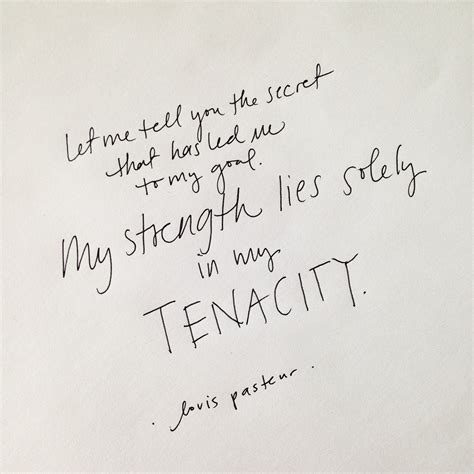
LouisPasteurQuote


FINGERNAILS

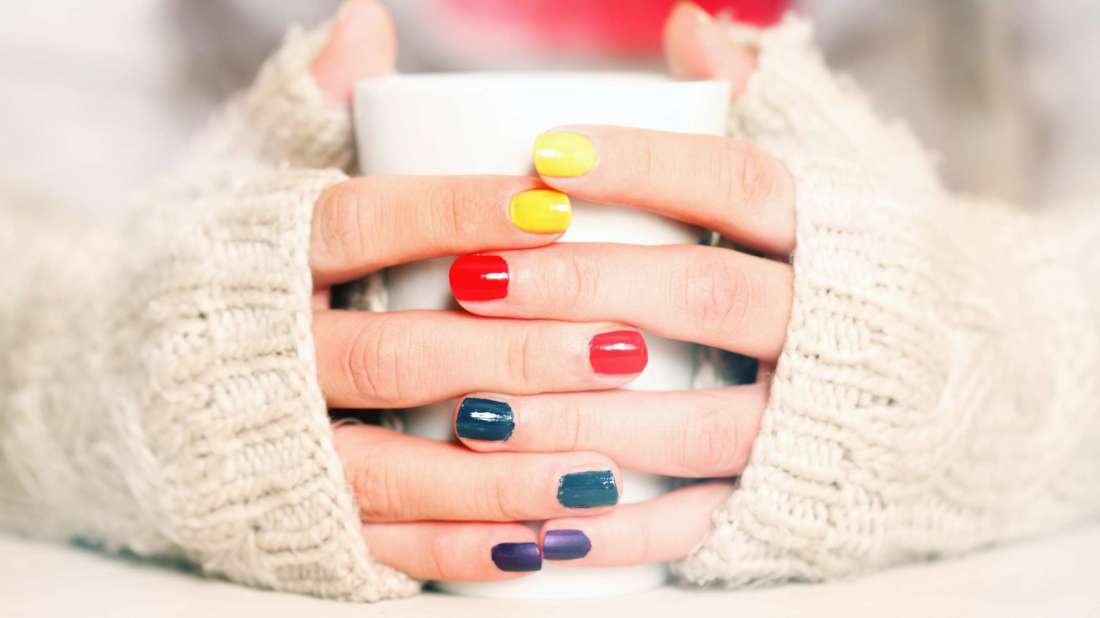
It’s about time I wrote a post on fingernails – the one item on the human body that perplexes me.  Women (although more and more men are partaking) spend a fortune on their nails, and it’s the one beauty item I think women do just for themselves – very few men in my recollection notice a woman because of her pretty painted nails.  Why do women paint their nails?  Because nails, like teeth, are readily visible by everyone and a beautiful set of painted nails completes any outfit, makes women feel good, and really sends the message that you take care of yourself.  But what does the nail polish hide?

Fingernails perplex me because I really don’t know the proper way to take care of them. My nails tend to be dry and cracked in the winter, and they cycle through being hard surfaced to brittle.  Have you ever injured your nail and it never quite recovers?  In digging into this – I learned quite a bit about nails that I didn’t know.  For my male readers – don’t run away scared from this post – all the fun facts below are applicable to the male race as well.

Nails grow 3.5 millimeters per month and they grow faster on your dominant hand. The hard part of the nail is called the “nail palate” and the white portion of the nail at its base is called “lunula” (little moon).

Nails and hair are made out of the same material – Keratin!  Foods that are good for your hair are good for your nails. What might those foods be?  You might be interested to learn that beer is good for your nails.  Other foods include red meat, blueberries, almonds, oysters, milk, walnuts, coconut oil, eggs and salmon.

It’s important to let your nails be exposed to the air in-between manicures.   In order to keep your nails healthy, try to stay away from weekly manicures.  Nails are living tissues, and oxygen does penetrate through the nail plate to the nail bed.  Covering the nail and bed with polish dries up your nail, making them less flexible and strong.

Nails need blood to survive.  That explains why sometimes your nail falls off after it has been injured.  The nail plate needs oxygen and blood flow to grow normally, and an injury damages all connections that provide nutrients to your nails.  Nails generally grow back fresh, but if the injury occurs at the root of the nail, it can become permanent and the nail will never grow the right way.

Every manicure I’ve had starts with the manicurist removing my cuticles.  Believe it or not – cuticles are necessary and essential to the health of the human body.   The tiny cuticle, that semi-circular layer of non-living, almost invisible dead skin cells that cover the back of the visible nail plate help to seal moisture and germs out of the body – they should be treated with care and left in place – crucial.

Nails are what separates mammals from primates.  Most mammals have claws, and the fact that primates (yes – humans too!) have nails is what makes us unique.  It has been determined that while claws would be helpful for large primates to climb trees – they would be a hindrance rather than a help when grabbing berries and fruit off of smaller branches.  Interesting right?

Nail biting has now been listed as a form of obsessive compulsive disorder in the new Diagnostic and Statistical Manual of Mental Disorders.  This newly defined disorder is called “Onychophagia”.  People generally bite their nails out of nervousness, while a smaller percentage of the population have a phobia about it.

Stress takes a toll on your nails.  Try to get plenty of sleep and manage stress to give your nails what they need to grow strong.  When under stress, your body diverts energy and nutrients away from growing healthy nails and hair.

Nails tend to reveal the overall health of your body.  Nail bed discoloration (blueish) can indicate lung disease. and capillaries in the cuticles can indicate an auto immune disease.   Nails are such windows into what’s going on with the human body that it’s recommended to not wear nail polish while having surgery.   Unpolished nails are important because during anesthesia, your oxygen is monitored by your nail beds – polished nail beds could result in inaccurate oxygen level readings.

So what does all this fingernail knowledge leave me with?  The shape of your nails and how fast they grow is usually genetic – you can’t do much about that.  You can, however, take care of your nails by doing some simple things that when done regularly, become a habit and part of your routine.  Always wear household gloves when cleaning and doing the dishes, and gardening gloves when outside.  Hand sanitizer is a big culprit for drying out nails so try to avoid using it.  Steer clear of weekly manicures, and be sure to use a thick hand and nail cream before bed and apply again in the morning. File off the rough edges of your fingernails, and keep your cuticles smooth and uncut. Eat those delicious foods listed above and let’s see where we are in a few months – sound like a plan?

fingernails