Hair

Ah yes – hair – the topic of discussion that women could go on and on about for hours.  It evokes all sorts of sentiments;  disgust – ewwwww – I found a hair in my salad; envy – she has the most beautiful hair; enthusiasm – blondes have more fun; frustration – I’m totally turning gray; and creativity – look at that young girl with the trendy gray/purple hair – she totally rocks it.  We women seem to want what we don’t have – those with curls and frizz want straight hair, those with straight hair want curls and frizz, brunettes want to have lighter hair, and blonds want to be a red-head.  Don’t forget the inevitable gray hair – should we go natural?  Let it go?  Dye it up?

Not only does hair conjure up such passionate emotions – our hair is a label that we are stuck with day in and day out- not like clothes we buy in the store and have a choice over.  Hair pours out from our body and we have no control over it.  The labels that are associated with hair are stereotypes that are hard to overcome – long hair is viewed as sexy, short hair professional and modern, spikes can appear dangerous, curly hair portrays a sense of being whimsical and fun, straight hair evokes a severity yet a professionalism as well.  Blondes are viewed as party girls, brunettes have a reputation for being mature and sophisticated, black hair is seen as exotic and mysterious, while red heads are perceived as unique, interesting and fiery.

I never liked my hair.  I have hair envy like no other.  Before the days of straighteners, my hair looked like a wild puffy cloud of brown marshmallow – it was everywhere.  I wanted Farrah Fawcett’s hair – the wispy flowing tapered hair that cascades down your neck.  I wanted pencil straight long hair like Cher.  I basically wanted what  I didn’t have.  As I have gotten older, I am tired of fighting the will of my hair.  So I let it go and have never looked back.

Go with your strengths.  If you hair is straight, keep it straight.  If it’s curly – keep it that way.  When a hairstyle looks great on a person it is because it is natural and is what makes them unique – I truly believe that.  Accepting my hair for what is truly is has taken the pressure off and has gone a long way in helping me to express my true self.   It is empowering and it really frees you.  I  have stopped worrying about how all the people in my life will perceive me and most importantly, how I perceive myself.  The positives are many.   I am now a huge fan of the “wash-n-go” which has shed a solid hour out of my morning routine.

So my hair philosophy is this:  LET IT GO.  Once you unchain yourself from your torturous beauty routine you will find a genuine confidence and a new freedom to live your life as you choose – not as your hairstyle dictates!

Just to show you how fun hair really is – enjoy these little tidbits!

  1. Humans are one of the only mammals to have a “naked” appearance with the majority of our hair concentrated on top of our heads.
  2. We are also unique in the length that our hair will grow. No other animals resort to cutting their hair the way that we do.
  3. Water weakens the weakest bonds within strands of hair, removing 1/3 of its strength. The simple act of brushing can lead to dire consequences in this weakened state.
  4. Black is the most common hair color. Red is the rarest and only exists in about 1 percent of the world’s population, with blonde hair found in 2 percent.
  5. All hair is dead, with the exception of the hair that’s still inside the epidermis of your scalp.
  6. The life span of a strand of hair is 5 years.
  7. Aside from bone marrow, hair is the fastest growing tissue in the body.
  8. The average person has 100,000 – 150,000 strands of hair on her head
  9. In Ancient Rome, women used to dye their hair blonde with pigeon dung
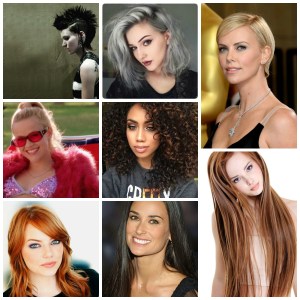
haircollage

Multi-Tasking

Multi-Tasking, a word unheard of back in the day, is one that seems to be a commonplace definitive statement about how we live our lives in the 21st century.   On any given day, we are doing a wide variety of tasks, mainly technology related, that can include social media, work, internet searches, blog posting, checking emails, paying bills online and shopping.

We have landed ourselves in a world where technology makes all these options available for us; instant communication and feedback – it’s all part of life these days. We answer e-mails while talking on the phone. We work on our schedules and calendars while driving and listening to the radio. We listen to podcasts while exercising.  This hub of activity is the driving force behind the word “multitasking”, the art of focusing on everything at the same time.

Those of us at a certain age find multitasking can be done capably though not comfortably. I juggle multiple screens, simultaneous text messages and emails but yet it never quite feels right.  I am a bit tired, like I’m not operating with full steam ahead.  Focus no longer produces clarity. At day’s end when I have the opportunity to completely tune out, it is not a luxury I enjoy because it is such an effort to get there.  Why is multitasking so overwhelming?  It is overwhelming because it’s not possible!

Brain researchers say we cannot multitask?  I first heard this theory on NPR, and followed up with this radical proposal by an article written by Jon Hamilton “Think You’re Multitasking”?  Think Again

“People can’t multitask very well, and when people say they can, they’re deluding themselves,” said neuroscientist Earl Miller. And, he said, “The brain is very good at deluding itself.”

That’s all of us in society today – delusionists. We think we are focusing on everything at once, when our brains do not have that capability.  What actually occurs is the human brain is engineered to shift our focus from one thing to the next, not simultaneously, but with such astonishing quickness that we delude ourselves into thinking its happening all at once. This capability to shift from task to task is what makes the human brain so exemplary, but it is a process that we are taking to the limit as our frontal lobes are literally bouncing tasks like ping pong balls from one thing to the next in milliseconds.  This is a very stressful place to put our delicate processing center in and not mentally healthy for us.  We are not engineered to process in this way and that is why it is so tiring. Do two or more things simultaneously, and you’ll do none at full capacity and wear yourself out in the meantime.
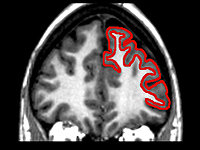
frontallobe
Shown in red, the frontal lobe is the home of the central processing unit in the brain.  This red highlighted area decreases in volume as we age. This region helps the brain decide which tasks to focus on and when to disregard those that don’t matter.

Researchers can actually see the brain struggle when people attempt to multitask. It becomes an over-stimulating process for us mentally, and our frontal lobe simply gets worn out.

What to do?  This is a tough one but do a google search and the options are many. I am proudly working on disengaging myself from multitasking and I am finding myself more centered and feeling more accomplished with the tasks I am working on.  Here is what is working for me:

  1. Give up on multitasking 
  2. Be alone on occasion without any distruptions
  3. Focus on one thing at a time
  4. Set mobile devices aside
  5. Schedule time for work and time for you – your professional life should not be conducted simultaneously with your private life – keep them separate.
  6.  Complete one task before taking on another
  7. Take a pause – it’s okay!
    Trust me, the results are beneficial – a new release of energy in your life will emerge and a better sense of accomplishment – a job well done in its entirety – done, accomplished and put away completely as the next task awaits.


Rebirth and Rejuvenation

This is the time of year when I have spring fever.  It can be a dangerous emotion to feel, given that northern Illinois can be 60 degrees one day, and then turn cold and snowy the next.  Having just experienced a short lived warm weekend, I managed to get outside and get a leg up on things.  March is a perfect time of year to trim climates, prune spirea and pull those weeds that really never seem to die during the winter. Although the approach of spring does signify the sewing of seeds, it also is a time to come forth with new ideas, and to reflect on your emotional and physical well-being.

I am not much of a churchgoer, but I like what the Lenten season represents as spring approaches. Whether you are a believer or not, it’s hard not to admire the practice of Lent. I see a direct correlation  between hope eternal with the coming of spring and the Christian belief in the resurrection of Jesus Christ as Lent concludes.

Christians who observe Lent typically make a commitment to give up something, or dedicate themselves during this time to self-reflection, which usually translates into self-improvement. My idea of Lent was to be a kinder, gentler version of myself, rather than depriving myself of my favorite foods which seemed to be the typical thing to do.  I had goals such as not snapping at my husband, doing one nice thing daily for someone, or volunteering weekly for the food pantry.  This ongoing dedication to improvement and mindfulness results in a rebirth of sorts, especially if you stick with it.  To acknowledge the experience of practicing such mindfulness during Lent, our Church would  “re-baptized” parishioners to signify this rebirth of themselves.  It was a wonderful symbolic gesture for me and one I think of often. Spring helps us to realize lessons as precious as this. Reflection and self-improvement lead to a resurrection of sorts.  Trust me, you will will feel it.

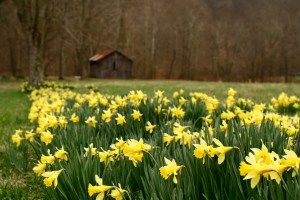
This awakening or being “reborn”  seems to be everywhere during the spring, especially if you live in colder climates. The days become longer, the birds start chirping earlier in the morning, daffodils and tulips poke their heads through the ground and the occasional whiff of someone barbecuing fills the air.  This blossoming vitality makes me want to be vivacious as well – both inside and out.  There is the burst of energy. Do you feel it?

Get outside, take a walk, clean the garage, hose down all your screens, clean up sticks and debris in your yard.  Wash your windows, replace drab linens with colorful tones and starting wearing your brightest of brights that are in your closet.

Take this spring season as a chance to participate in some community service, tending simultaneously to your environment as well as yourself. Help write the chapter of new beginnings this spring in creating positive outcomes for all areas of nature, and our health.  Reflection and hope – this is what spring represents. And if I every lose sight of that, I refer to one of my most favorite poems by William Wordsworth.  This poem will keep you mindful.

I wandered lonely as a cloud
That floats on high o’er vales and hills,
When all at once I saw a crowd,
A host, of golden daffodils;
Beside the lake, beneath the trees,

Fluttering and dancing in the breeze.

Continuous as the stars that shine
And twinkle on the milky way,
They stretched in never-ending line
Along the margin of a bay:
Ten thousand saw I at a glance,

Tossing their heads in sprightly dance.

The waves beside them danced; but they
Out-did the sparkling waves in glee:
A poet could not but be gay,
In such a jocund company:
I gazed—and gazed—but little thought

What wealth the show to me had brought:

For oft, when on my couch I lie
In vacant or in pensive mood,
They flash upon that inward eye
Which is the bliss of solitude;
And then my heart with pleasure fills,

And dances with the daffodils.

Barn_daffodils